Thailand's Devastating Floods Affect Plywood Supply Chain: From Logging to Exports

- Posted in Birch plywood by

Back in November and December 2025, Thailand’s southern provinces got hit hard by the worst floods they’ve seen in decades—Hat Yai City, over in Songkhla Province, even logged a whopping 335 millimeters of rain in just one day. At first, it was just a natural disaster, but it didn’t take long for it to spiral into a supply chain nightmare for Thailand’s plywood industry. The thing is, this southern region is a big player when it comes to Thailand’s rubber wood and eucalyptus wood output—and those two are the main raw materials used to make birch plywood. Now, every step in the plywood supply chain, from the logging work way out in the forests to the export terminals by the ports, has been messed up pretty badly. The trouble isn’t just staying within Thailand, either; it’s sending ripples all the way to international markets too.

The crisis starts at the very source: rubber wood/eucalyptus wood logging. Southern Thailand, including provinces like Songkhla, Trang, and Satun, is the heartland of the country’s rubberwood and eucalyptus wood industry, and these areas have been submerged by floodwaters for weeks. Forest floors saturated with water have become impassable for heavy logging machinery, bringing harvesting operations to a complete halt . Even for plantations on higher ground, the destruction of rural roads and access routes has trapped raw logs in forests, preventing them from reaching processing facilities. To make matters worse, there’s a ton of rubberwood and eucalyptus logs that were stored in open-air yards—you know, the kind without proper covers—and a lot of them either got swept away by the floodwaters or ruined from sitting in water for so long. Industry folks who’ve been in this business a while say those water-soaked logs are a mess: their moisture levels shoot way up, and mold starts growing all over them. That totally kills their quality, not to mention their value when you try to sell or use them. So it’s a double whammy here—first, we’re losing a bunch of logs we already had in stock, and second, the ones that are left are basically useless. Right away, that means the plywood factories downstream don’t have enough raw materials to keep making stuff.

The disruption then cascades to the rotary cutting stage, a critical process that transforms rubber or eucalyptus logs into veneer sheets, the building blocks of plywood. Thailand’s southern rotary cutting mills, many of which are located in flood-affected zones, have been forced to suspend operations due to power outages, equipment damage, and material shortages. Even mills outside the worst-hit areas face operational constraints, as the lack of incoming logs has left production lines idle. A report from industry insiders indicates that average capacity utilization at these facilities has dropped to just 80% , with some smaller mills shutting down entirely. The impact is particularly severe for specialized veneer products: mainstream grades like A grade and B grade rubberwood veneer have been facing the supply shortages, while longer-length veneers are nearly unavailable in the market . This bottleneck in rotary cutting has directly constrained the output of plywood manufacturers downstream.

For Thailand’s plywood production sector, the cumulative effects of logging and rotary cutting disruptions have been devastating. Factories across the southern region are operating at reduced capacity, with many struggling to fulfill existing orders. The shortage of quality veneer has forced some manufacturers to either slow production or switch to lower-grade raw materials, compromising the quality of finished plywood. Moreover, the flood-induced damage to production facilities—including waterlogged machinery and damaged warehouses—has further prolonged recovery timelines. Industry analysts warn that even after floodwaters recede, it will take weeks to restore full production capacity, as mills must first repair equipment, clear debris, and replenish raw material stocks. The supply chain chaos has ultimately spilled over into Thailand’s plywood export market, which relies heavily on demand from USA and other countries. Some US importers have already received notifications from Thai suppliers about suspended container loading and delayed shipping schedules, with transport times expected to extend significantly from late November onwards . This disruption has led to immediate price volatility in the global market: raw materials have risen by 5-10 US dollars, plywood FOB Leam Chabang has risen with it. Thai exporters are now facing a dual challenge: meeting delayed orders amid constrained production while navigating a global market with fluctuating demand. Some industry insiders suggest that if the supply shortage persists, Thai exporters may shift their focus to emerging Southeast Asian markets to mitigate losses.

The road to recovery for Thailand’s plywood supply chain remains uncertain. While weather conditions have improved slightly since late November, with water levels receding in some areas , the long-term impact of the floods will linger. Logging operations can only resume once forest floors dry out and access roads are repaired, and rotary cutting mills and plywood factories face a lengthy recovery process. The Thai government’s post-disaster relief measures, including financial aid and low-interest loans for affected industries , may help accelerate recovery, but industry experts predict that supply chain tensions will persist for at least the next three to six months. For global buyers dependent on Thai plywood, this means preparing for continued price volatility and potential supply shortages, while exploring alternative sources or adjusting procurement strategies.

In conclusion, Thailand’s 2025 floods have exposed the vulnerability of the global plywood supply chain to climate-related disasters. What began as extreme rainfall in the country’s southern provinces has disrupted every critical link—from rubberwood logging and rotary cutting to plywood manufacturing and exports—creating a crisis that extends far beyond Thailand’s borders. As the world grapples with increasingly frequent extreme weather events, the plywood industry and its stakeholders must rethink resilience strategies, from diversifying supply sources to investing in flood-resistant infrastructure. For now, all eyes remain on Thailand’s recovery progress, as the pace of its post-flood reconstruction will determine the stability of the global plywood market in the months ahead.

As a plywood factory in Thailand, we will diversify our raw material sources; when raw materials are sufficiently supplied, we will stock up on more raw materials, such as rubber/eucalyptus/pine veneer cores, birch WPF veneers and enhance our factory's flood prevention capabilities. This enables us to provide stable birch plywood supplies to both local cabinet facotiries and foreign customers.

Density and Oil Content of Keruing Wood: Key Traits and Marine Plywood Suitability

- Posted in Market by

In wood processing and foreign trade, wood selection depends on how its physical properties fit application needs. Keruing, a hardwood for industrial use, stands out for its density and oil content. Unlike rubberwood or eucalyptus, it has unique density differences and contains oleo-resin—bringing both processing challenges and application strengths. This article explores Keruing’s density and oil traits, explains why it fails as a substrate for birch veneer lamination and paint finishing, and confirms its ideal use in marine plywood.

  1. Density: Keruing vs. Rubberwood​ Density shapes wood strength and durability. Keruing’s air-dried density is 20–30% higher than rubberwood’s, even higher than eucalyptus' . This comes from tight fiber arrangement, thick cell walls, and small cavities—giving Keruing better compressive/flexural strength and hardness. Plywood made from it resists deformation and cracking, suiting scenarios needing long-term stability.​ Yet high density brings challenges: heavier Keruing raises transport costs; it wears tools faster during processing, requiring sharper equipment; pre-drilling is needed to avoid cracking when nailing. Still, these issues are manageable with optimized techniques, and its structural advantages remain irreplaceable in specific uses.

  2. Oil Content: Why Keruing Fails for Veneer and Panit Keruing’s oleo-resin (a mix of resin acids, fatty acids, and neutral substances) is its defining chemical trait—and the main reason it’s unsuitable for birch veneer lamination or paint finishing.

2.1 No Good for Birch Veneer Lamination Birch veneer needs strong adhesion to the substrate. Keruing’s oleo-resin seeps out when heated or sanded, forming a sticky film that blocks adhesive bonding. Over time, veneer delaminate easily; temperature changes worsen this. And the oil from keruing wood may penetrate the surface of birch veneer. Also, Keruing’s high density causes uneven surface tension, leading to bubbles or warping in thin birch veneer—ruining quality. 2.2 Poor for Paint Finishing Paint requires even adhesion and drying. Keruing’s resin contaminates sandpaper during pre-painting sanding, leaving a sticky, uneven surface that causes brush marks or orange peel texture. The resin weakens paint adhesion, leading to peeling or blistering. Even after painting, resin seepage causes discoloration. Pre-treatments (e.g., solvent cleaning) only temporarily reduce seepage, making Keruing risky for painted products like furniture. 2.3 Managing Oil-Related Issues For other uses (not veneer/paint), industries use pre-drying (to reduce resin seepage) or solvent soaking. Cooling cutting (e.g., water spraying) during processing prevents resin softening. But these work only for industrial applications like marine plywood—not for laminate birch veneer or paint.

  1. Keruing: Ideal for Marine Plywood Keruing’s density and oil content, flaws for veneer/paint, make it perfect for marine plywood—used in ships, docks, and offshore structures, which demand strength, water resistance, and anti-microbial properties. First, high density gives marine plywood needed stability. Ships face waves and currents; Keruing’s strength resists deformation and impacts, unlike weak rubber/eucalyptus. Second, oleo-resin boosts water and corrosion resistance. It forms a protective film, blocking moisture and salt—preventing swelling, rotting, and aging. Third, the resin fights microbes. Marine bacteria and fungi decompose wood, but Keruing’s resin has natural anti-bacterial compounds, reducing decay and maintenance costs. Finally, resin enhances wear and weather resistance. It lowers friction for ship decks and resists UV rays/rain, keeping plywood durable. In short, Keruing’s density ensures stability, while its oleo-resin—though bad for birch veneer lamination and finishing —gives water, corrosion, and anti-microbial protection. These match marine environment needs, making it ideal for marine plywood.

As a professional manufacturers, we must leverage its strengths (marine use) and avoid its weaknesses (veneer/finishing) to maximize value.

Having a deep grasp of the properties of raw materials like Keruing and rubberwood/eucalyptus wood, we avoid unsuitable options (such as Keruing for birch veneer substrates) and select the right materials to create high-quality birch plywood that meets customer expectations!

News for CVD/AD on VN, Indonesia and China

- Posted in Market by

November 14, 2025 MEMORANDUM TO: The Record FROM: Christopher Abbott Deputy Assistant Secretary for Policy and Negotiations, performing the non-exclusive functions and duties of the Assistant Secretary for Enforcement & Compliance SUBJECT: Deadlines Affected by the Shutdown of the Federal Government As a result of a shutdown of the Federal Government, the Department of Commerce was closed on October 1, 2025, and resumed operations on November 13, 2025. After careful consideration, Enforcement and Compliance, International Trade Administration, has determined that any delay and confusion caused by the closure of the Federal Government will best be minimized by uniformly tolling all Enforcement and Compliance deadlines for the effective duration of the recent closure and sufficient time to resume normal operations (i.e., 47 days), 1 with the exception of submissions due during the shutdown and requests for administrative reviews of suspension agreements and antidumping duty (AD) and countervailing duty (CVD) orders, as further discussed below. The Antideficiency Act, 31 U.S.C. § 1341 et seq., makes it illegal to operate a government agency absent budgetary authority from Congress. Accordingly, it was impossible for Enforcement and Compliance to operate during the shutdown. It was also impossible for Enforcement and Compliance to accelerate its proceedings by the number of days on which the agency was closed -- we simply lack the resources. Enforcement and Compliance also was not able to consider requests for extensions of any deadlines during the shutdown. With regard to pending submissions due during the government shutdown, on October 1, 2025, Enforcement and Compliance placed the following notification to the public on ACCESS: “For all pending submissions, please submit them by the current due date. If you need additional time, you may have an extension of 10 days for questionnaire responses, without submitting a request for an extension of the deadline. For questionnaire 1 The shutdown began October 1, 2025, and Enforcement and Compliance resumed operations November 13, 2025. Therefore, Enforcement and Compliance was closed for 43 calendar days. In addition, September 30, 2025, involved considerable focus on preparation for the potential for a shutdown. Moreover, beginning November 13, 2025, Enforcement and Compliance is focusing largely on the full resumption of operations by Monday, November 17, 2025. Tolling deadlines by 47 days is also consistent with the extension given on submissions due during the shutdown. Submissions due during the shutdown were extended by two business days from the government reopening, i.e., November 17, 2025. responses that are due before the government re-opens, if there are questions where you require clarification, please submit answers to all other questions according to the timeline above and separately submit clarification questions by the same deadlines. For all other submissions, you may have an extension of 10 days, without submitting a request for an extension of the deadline, and if the government continues to be closed when your submission is due (including the extension), please submit your response within two business days of the government reopening. The schedule for the submission of rebuttal case briefs will be set by the case team after the government re-opens. For any additional extensions beyond this guidance, please contact the case team once the government re-opens. The submission of factual information to rebut, clarify, or correct factual information contained in questionnaire responses, in accordance with 19 CFR 351.301(c)(v), will activate after the questionnaire response is available in ACCESS after the government reopens.” Thus, for all submissions that were pending during the shutdown, please follow the above guidance. As noted above, if the government continued be closed when your submission was due, that response is due within two days of the government reopening. Because ACCESS was temporarily disabled on Thursday, November 13, we are providing one additional business day to submit responses that were due during the shutdown. Accordingly, submissions that were due during the shutdown are due on Monday, November 17, 2025, which is 47 days from the date the government shutdown began. For all other deadlines, Enforcement and Compliance is tolling such deadlines for the effective duration of the recent Federal Government shutdown (i.e., 47 days, which includes the number of days shut down, as well as the days for the shutdown preparation and resumption of operations). With the exception of court-ordered redeterminations and the deadlines specified above, this determination applies to every proceeding before Enforcement and Compliance as of the date of this memorandum, including proceedings relating to the U.S. Foreign-Trade Zones Board and any deadlines for submitting comments not connected with a specific proceeding (e.g., requests for comments on proposed changes in methodology). It includes deadlines for actions by Enforcement and Compliance (such as preliminary and final determinations in investigations and administrative reviews in AD/CVD proceedings). If the new deadline falls on a weekend or a Federal holiday, in accordance with our practice, the deadline will be moved to the next business day. Finally, for AD and CVD orders and suspension agreements with October anniversary months, all requests for administrative reviews are due by November 17, 2025. For AD and CVD orders and suspension agreements with November anniversary months, all requests for administrative reviews will now be due by December 31, 2025. Parties that have already submitted a request for review for proceedings with a November anniversary month do not need to resubmit the request. Because normal publication of the notification of opportunity to request a review for proceedings with a November anniversary would have published during the partial shutdown, Enforcement and Compliance will issue a combined opportunity notice with regard to requesting administrative reviews of antidumping and countervailing duty orders and suspension agreements with November and December anniversary months. To ensure alignment of the opportunity notice with the last day of the anniversary month, for purposes of establishing future deadlines, the last day of the anniversary month for November cases is hereby tolled to December 31, 2025. Interested parties should contact the Enforcement and Compliance staff assigned to a specific proceeding if there are further questions.

A Grade Cores for Birch Plywood

- Posted in Birch plywood by

100% Grade A Core Veneers: The Premium White Birch Plywood

Great products start with great materials—and for white birch plywood, this principle is non-negotiable. At our facility, every sheet of white birch plywood is crafted exclusively with 100% Grade A core veneers. This isn’t just marketing; it’s the foundation of our product’s superiority, delivering tangible benefits to woodworkers, cabinet makers, and designers who demand excellence for their projects. enter image description here
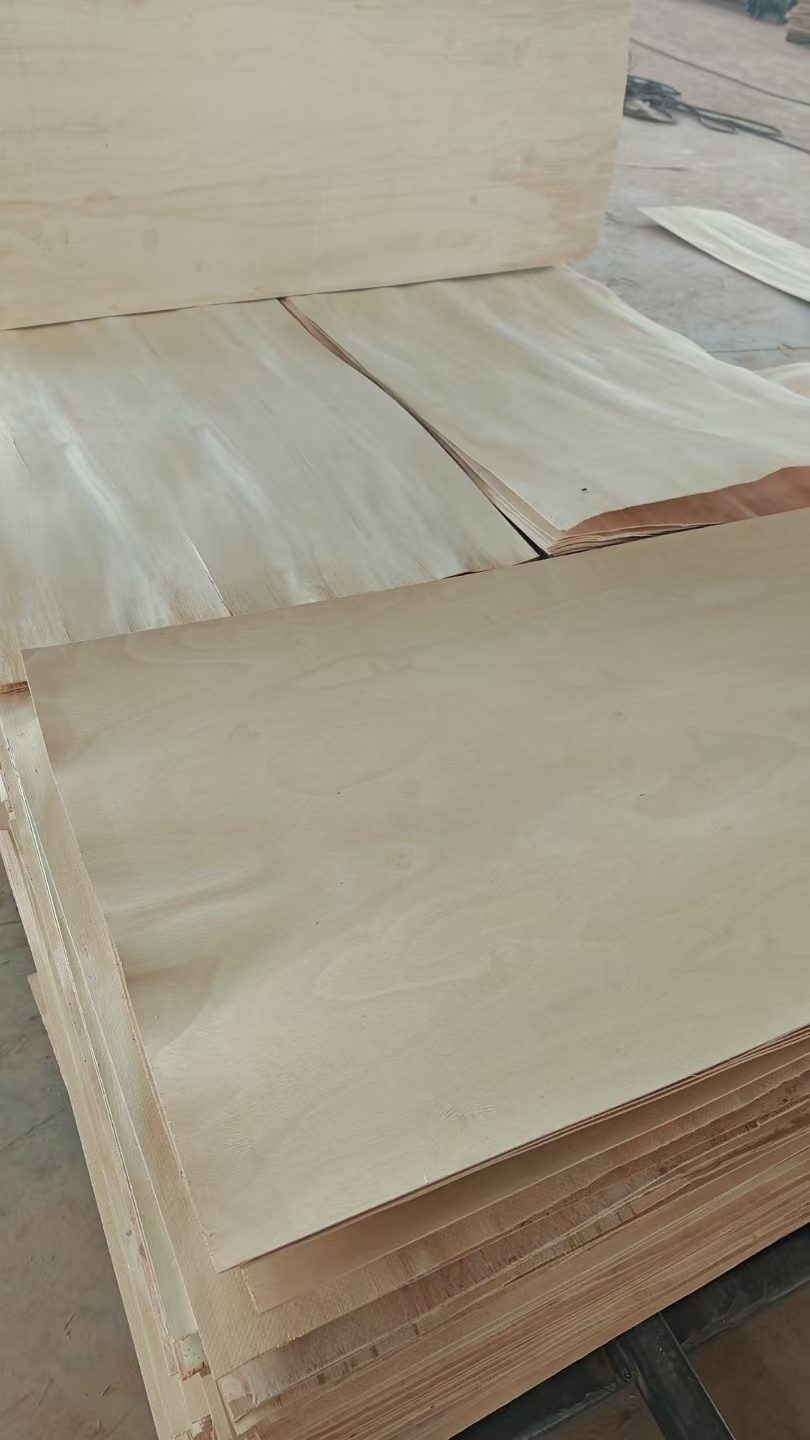
To appreciate why Grade A cores matter, first understand their distinction from lower-grade alternatives. Sourced from mature rubber trees, eucalyptus trees and pine trees in sustainably managed forests, each Grade A veneer undergoes strict screening. We reject any with big knot holes, split ones—only those with uniform grain, minimal flaws, and consistent thickness qualify. Unlike lower-grade cores (which may use B or C grade core veneers), our 100% Grade A cores ensuring a homogeneous structure that drives performance.

The first key advantage is tighter, more reliable bonding. A grade spliced cores and resin enhance adhesion with high-quality adhesives, but Grade A veneers—free of gaps or irregularities—let glue penetrate evenly. This creates a molecular bond that resists delamination, even under temperature swings, humidity, or heavy use. Lower-grade plywood often fails here: uneven surfaces or trapped air cause layers to separate over time, leading to costly repairs. Our Grade A core plywood maintains integrity for decades, whether in daily-use kitchen cabinets or exposed architectural elements.

Second, fewer imperfections eliminate frustration for craftsmen. Low-quality plywood hides flaws—gaps that sink when sanded, soft spots, or knots that bleed through finishes. With Grade A cores, these issues vanish. Uniform density means consistent strength across every square inch; sanding leaves a smooth, level surface. For cabinet makers, this cuts down on gap-filling and sanding time, ensuring a flawless base for painting, staining, or laminating. The result? Kitchen cabinets that lie flat, with solid edges and no unsightly blemishes.

A smoother base also elevates high-end finishing. Cabinetry, in particular, needs a surface that showcases wood grain or paint without distractions. Our Grade A cores create a seamless canvas: stains penetrate evenly (no blotchiness), and paints glide on for a factory-like finish. Unlike lower-grade plywood (which needs multiple primer/filler coats), our product reduces material costs and finishing time while delivering better results—whether for modern painted cabinets or traditional stained vanities.

These benefits extend beyond cabinetry. In furniture (dining tables, bookshelves), consistent strength prevents warping or sagging. In architectural millwork (wall panels, door skins), smooth surfaces and tight bonding ensure a perfect fit. Even in demanding settings like retail displays or commercial interiors, our plywood retains structural integrity and visual appeal. Contractors trust it not just for performance, but for efficiency: fewer faults mean faster projects and happier clients.

Our commitment to Grade A cores also means rigorous quality control. From raw log arrival to final inspection, we leave no room for error. Each veneer is checked for thickness, grain alignment, and defects before composing. State-of-the-art pressing equipment applies consistent pressure and temperature for perfect bonding. Every finished sheet is inspected for flatness, strength, and smoothness—ensuring every piece meets our high standard.

In an industry where cost-cutting often harms quality, our choice to use 100% Grade A cores is intentional. We know customers don’t just buy plywood—they invest in their projects, reputation, and client satisfaction. A cabinet maker needs a material that delivers long-lasting kitchens; A white brich importor needs a foundation for quality and stablity. Our white birch/fancy plywood meets these needs.

Long-term value further justifies the choice. Lower-grade plywood may cost less upfront, but it leads to costly repairs: cabinets with weak cores sag, furniture with poor bonding fails. Our Grade A core plywood avoids this, saving time and money over decades. For professionals who prioritize quality, it’s not just a material—it’s a promise of excellence, from the first layer to the finished product.

Long-term value further justifies the choice. Lower-grade plywood may cost less upfront, but it leads to costly repairs: cabinets with weak cores sag, furniture with poor bonding fails. Our Grade A core plywood avoids this, saving time and money over decades. For professionals who prioritize quality, it’s not just a material—it’s a promise of excellence, from the first layer to the finished product.

We are producing full spliced cores for high grade white birch plywood, fancy plywood, refinish plywood. HPL plywood
High-Quality Plywood: Ideal for Local Cabinet Makers & US Market

- Posted in Market by

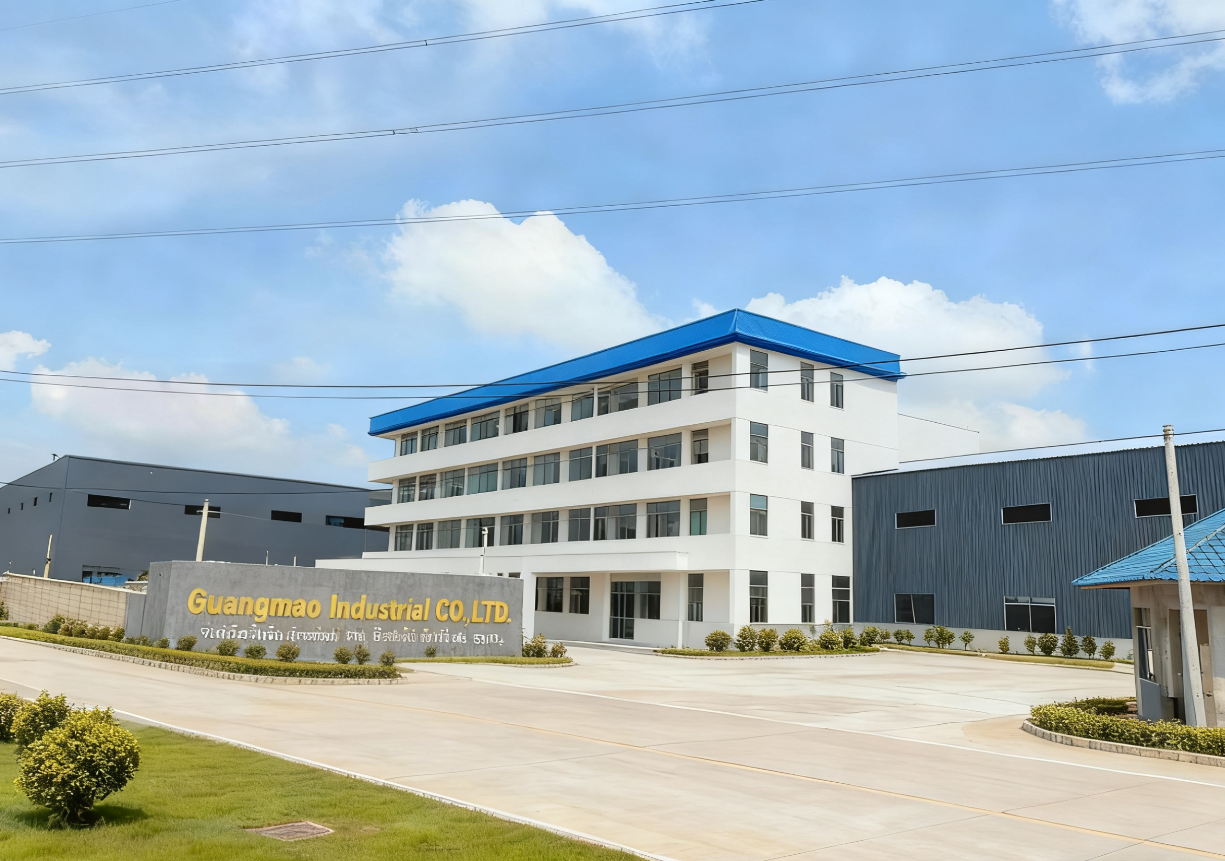
Hi, We’re Guangmao Industrial CO.,LTD —Thailand’s White Birch Plywood Solution for Cabinet Makers !

enter image description here

This month, we’re officially launching our state-of-the-art plywood factory in Thailand—built to serve both local cabinet workshops and US market clients. Why choose a new Thai factory for your plywood needs?

Fresh, modern equipment: Our brand-new production line (2025 model) ensures consistent thickness, smooth surfaces, and minimal defects (critical for cabinet finishing).

Thailand’s cost advantage: Local access to high-quality rubberwood/eucalyptus raw materials + efficient manufacturing = competitive pricing (without sacrificing quality).

Dual-market focus: We’re set up to support small-batch local orders and large US bulk shipments (compliant with your import rules).

Custom cuts: Need specific sizes (e.g., 3x6ft, 15mm thickness) for your cabinet designs? We handle small-batch customizations.

For US Market Clients: US-compliant quality: Our plywood meets CARB Phase 2 /EPA TSCA VI and FSC certification—no customs headaches for your imports. Stable bulk supply: We’ll stock 5,000+ CBM monthly (standard 4x8ft, 4/5.2/9/12/15/18/21/24mm) to support your ongoing orders.

Transparent logistics: Partnered with top Thai freight forwarders to deliver to US ports (LA/NY) in 14-40 days.

Let’s Start Your First Order (We’re Ready This Month!) Our team skilled worker and professional Chinese manager team is ready to support your business—let’s connect! Oliver@guangmaowood.com